ActivityKyoto, Kansai, Japan
A Tea Ceremony in Kyoto
One bowl of matcha, ninety minutes of attention
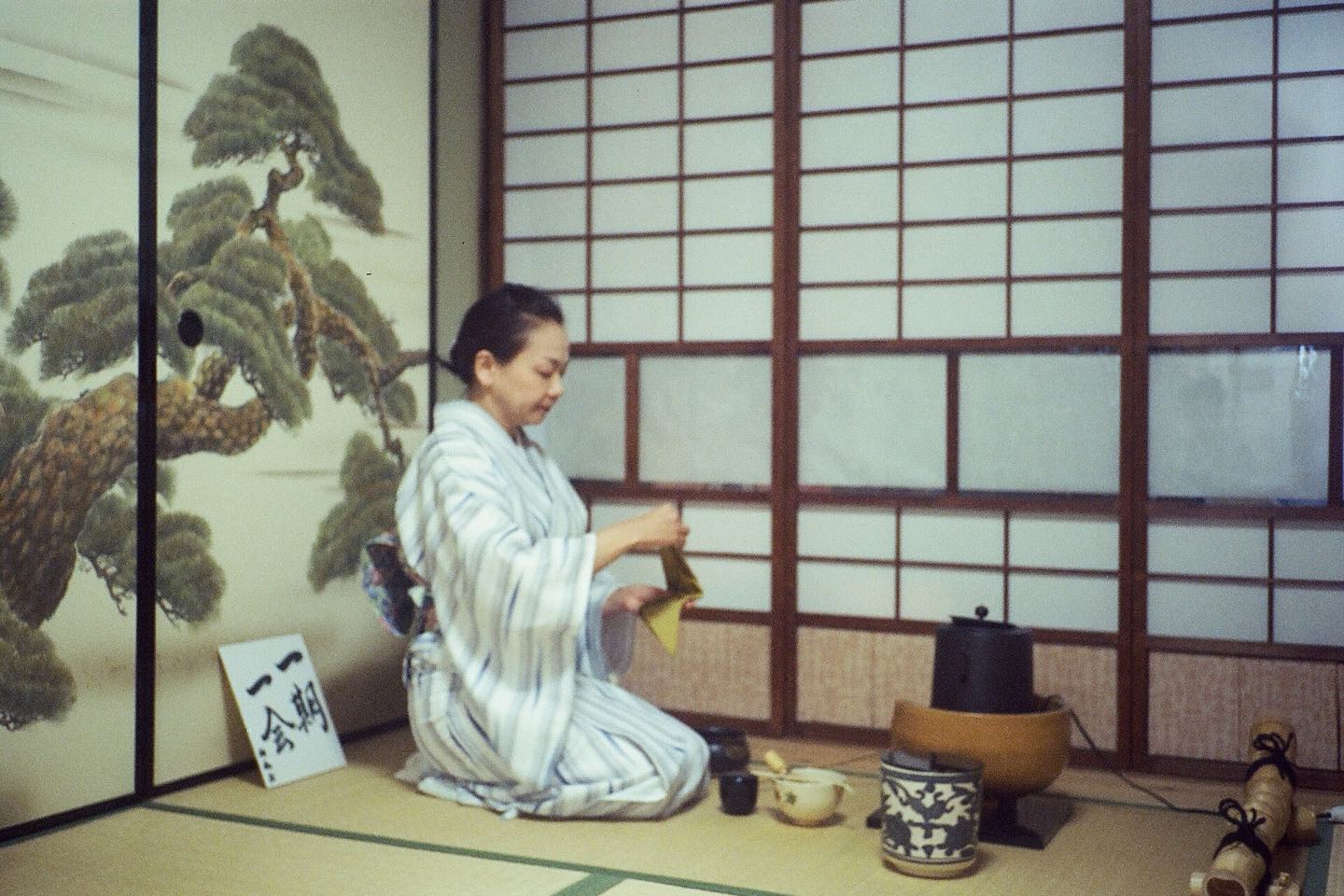
The Japanese tea ceremony is less about tea than about paying attention. How to choose a ceremony in Kyoto, and what will happen when you kneel down.
The way of tea
Chado, the way of tea, was shaped in sixteenth-century Kyoto by the tea master Sen no Rikyu, who turned a simple act of hospitality into an art of restraint. Every movement of the host, from folding the silk cloth to warming the bowl, is set down and practised for years, and every object in the room, from the scroll in the alcove to the single flower beneath it, is chosen for the day and the season.
A ceremony for visitors lasts about ninety minutes. You will be shown how to enter the tea room, how to sit in seiza (cushions are offered if your knees object), and how to receive a sweet before the tea, so its sugar balances the bitterness of the matcha. When the bowl is placed before you, bow, lift it with your right hand onto your left palm, turn it twice so you do not drink from its front, and drink in three or four sips. The last sip may be slurped; it tells the host you enjoyed it.
Many ceremonies end with you whisking your own bowl, which is harder than it looks.
Preparing the tea
Choosing a ceremony
- Small groups of six or fewer make for a calmer room
- Look for a host trained in the Urasenke or Omotesenke schools
- Morning sessions are quieter and the light is softer
- Wear socks: you will leave your shoes at the door
About this story

Saki SakuraAuthor
Sakura JourneysPublisher
Keep this story